
Blog · E-commerce
Online Store Design: 2026 Guide to Turning Visits into Sales
Estimated reading time: 9-10 minutes
E-commerce in Mexico is no longer an emerging channel: it is a structural engine of the economy. In 2025 it reached a market value of 941 billion pesos, with annual growth of 19.2% according to the 2026 Online Sales Study from the Mexican Online Sales Association (AMVO), which placed the country 8th in the world in digital retail sales penetration. That same study reports that 77.2 million people bought something online in Mexico during 2025, a figure projected to keep growing in 2026.
The problem is that having an online store is no longer enough to take part in that growth: competition for the shopper's attention is high, and your online store design is what decides, in the first few seconds, whether a visitor stays to buy or leaves for the next competitor. In this guide we explain what good online store design should include in 2026, how it differs from technical development and what to look for when choosing who to hire.
Behind that growth is a real change in behavior: digital-native stores are gaining ground on traditional ones, shoppers increasingly combine channels before deciding, and patience with a poor buying experience keeps shrinking. In that context, competing on price alone is no longer enough: the buying experience itself has become a deciding factor.
Online store design vs. development: they are not the same thing
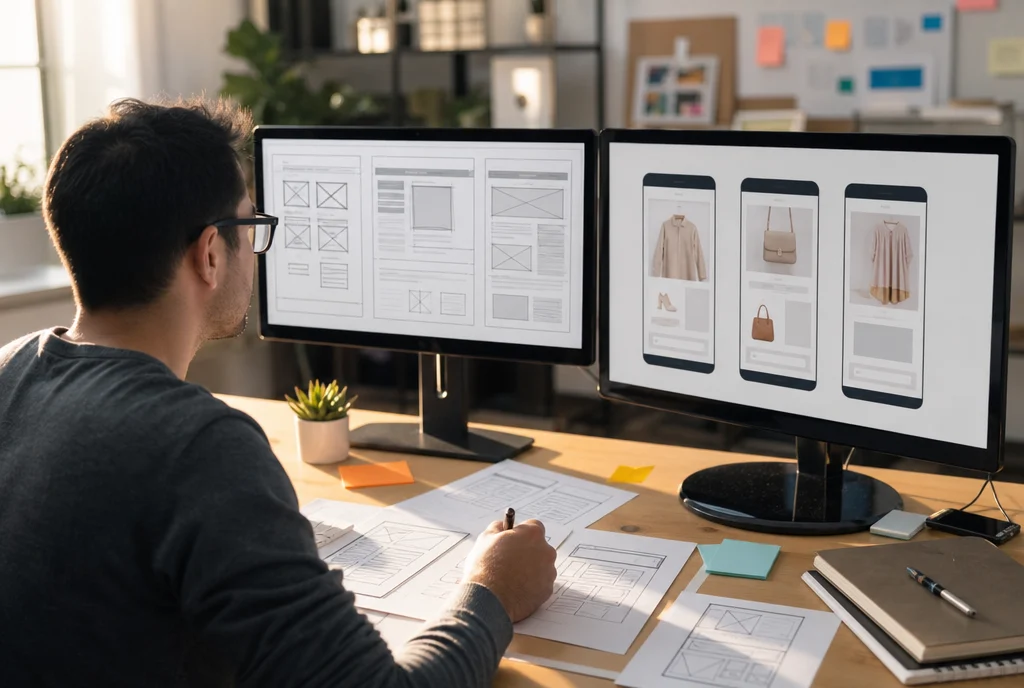
The two terms are often used as synonyms, but they serve different, complementary functions. Online store design defines the visual and navigation experience: the hierarchy of categories, how products are presented, the checkout process and the brand identity that builds trust. Online store development, on the other hand, is the technical build behind that experience: the platform, payment integrations, hosting, loading speed and site security.
A successful e-commerce project needs both disciplines working together. A spectacular design on a slow or poorly configured technical base loses sales just like a technically solid site that is confusing to navigate. That is why it pays to look for a team that handles online store design and online store development as a single integrated process, not as two vendors who never talk to each other.
Why loading speed drives more sales than visual design
According to Google data, 53% of mobile visits leave a page that takes more than three seconds to load. The impact doesn't stop there: multiple e-commerce studies (Akamai, Google, Portent) agree that each additional second of load time correlates with a conversion drop of roughly 7%. An e-commerce store that loads in under 2 seconds records an average conversion rate of 3.05%, compared with just 1.94% for those that take between 3 and 4 seconds.
This means that no matter how attractive your online store design looks, if the technical base is slow, a good share of your traffic will never get to see the full catalog. Compressing images, using high-performance hosting and keeping the code free of unnecessary scripts are not minor technical details: they are decisions directly tied to how many sales the store generates each month.

Cart abandonment: where most sales are lost
According to the Baymard Institute, the global average e-commerce cart abandonment rate is around 70%. The most common causes are directly related to online store design:
- Hidden or excessive shipping costs that only appear at the last step of checkout.
- Long or confusing payment processes that ask for too much information before the purchase is complete.
- Lack of flexible payment methods, especially relevant in Mexico, where cards, bank transfers and cash payments (OXXO) coexist as shopper preferences.
- Slow or error-prone sites during the final purchase step, the worst possible moment for something to fail.
- Lack of visible trust and security signals, such as secure payment badges or clear return policies.
Removing these obstacles is as important as any aesthetic decision: a simplified 2-3 step checkout, with clear payment methods and no last-minute surprises, can recover a significant share of the sales that are lost in the cart today.
Product pages: the store's silent salesperson
Without a physical salesperson to answer questions on the spot, the product page has to do that job on its own. Good online store design pays special attention to this page, since it is usually the last stop before the buying decision:
- Clear photography from several angles, ideally with zoom, since shoppers can't physically touch the product.
- Descriptions that answer real questions (measurements, materials, compatibility), not just generic filler text.
- Clear availability of sizes or variants, without forcing users to add to cart to discover that something is sold out.
- Visible reviews and ratings, which work as the digital equivalent of a trusted salesperson's recommendation.
- An obvious call to action, with the buy button not lost beneath blocks of secondary content.
Mobile-first design: where most purchases happen
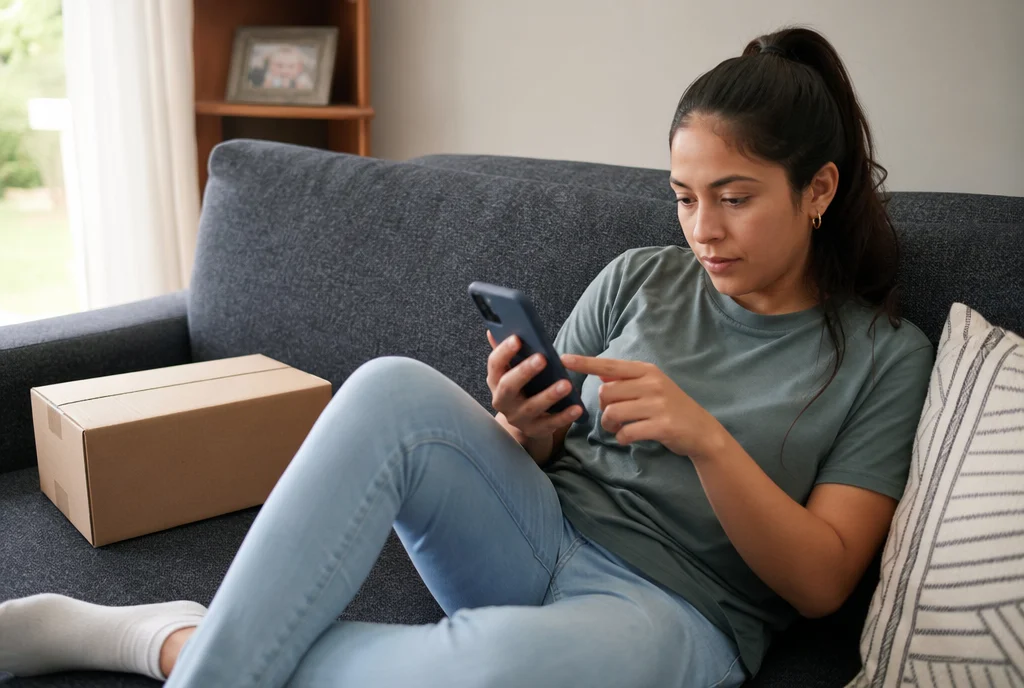
Mexican digital shoppers browse mainly from their phones, and the fastest-growing categories (digital-native stores, or “Pure Players”) grew 23.7% in 2025, above the sector's overall growth. An online store design built first for desktop and adapted to mobile later tends to carry usability problems: small buttons, forms designed for a mouse and keyboard, and slower load times on mobile networks. Designing mobile-first from the start avoids that baggage and builds the experience around how most users actually shop.
Choosing an online store builder: platform vs. custom development
One of the first decisions in any project is which online store builder to use. In general there are two paths:
- SaaS platforms (Shopify, Tiendanube, WooCommerce). Quick to launch, with pre-designed templates and built-in payment gateways. Ideal for mid-sized catalogs that want speed to market without building infrastructure from scratch.
- Custom development. More control over performance, specific integrations (ERP, CRM, inventory) and a fully personalized user experience, recommended for large catalogs or businesses with very particular operational needs.
No online store builder fixes bad design on its own: the platform is the tool, but the navigation strategy, product content and buying process still depend on human design decisions and ongoing optimization. Choosing the right platform is only the first step; what really determines whether a store sells is how that tool is used to solve the shopper's entire experience.
Why an online store agency beats a do-it-yourself builder
Subscription site builders promise to launch a store in minutes, and for a very small catalog that may be enough. But as the business grows, the limitations become costly: generic templates that don't reflect the brand, limited integrations and no conversion strategy behind the design. An online store agency brings what a template can't:
- Conversion strategy. Category structure, product pages and checkout designed to sell, not just to look good.
- An optimized technical base. Loading speed, security and technical SEO set up from launch, not fixed later.
- A real brand identity. A design that doesn't look like thousands of stores built on the same free template.
- Ongoing support. Adjustments, maintenance and constant optimization, instead of a site that is launched and abandoned.
The difference shows over time: a store built quickly on an unadjusted template tends to stall at its conversion rate, while an online store agency with continuous optimization keeps refining the design based on real behavior data, long after the initial launch.
How to choose the right online store agency
- A real e-commerce portfolio. Ask for examples of live stores, not just design mockups with no performance data or proven sales.
- A focus on speed and Core Web Vitals. Ask explicitly how they optimize load time, not just how the design looks in screenshots.
- Experience with the platform you need. Shopify, WooCommerce or custom development require different technical skills; confirm they master the one your project requires.
- A proven checkout process. They should be able to explain how they reduce friction in the payment process, not just how they design the product catalog.
- A post-launch maintenance plan. An online store is never “finished”; it needs constant adjustments based on real usage and buying behavior data.
Frequently asked questions
How long does it take to design and build an online store?
It depends on the complexity of the catalog and the integrations needed, but a project on a SaaS platform usually takes between 4 and 8 weeks, while custom development can run from 2 to 4 months.
Is it better to use a template or a custom design?
A template is faster and cheaper to start with, but a custom online store design usually builds more brand trust and better conversion rates in the medium term, especially in competitive markets.
Which platform does an online store agency recommend for a small business?
For small or mid-sized catalogs, platforms like Shopify or Tiendanube are usually the most efficient starting point; custom development is justified when product volume or integrations require it.
Does design affect the store's SEO ranking?
Yes. Loading speed, category structure and mobile experience are factors Google evaluates directly through Core Web Vitals, so good online store development impacts both sales and organic visibility.
Is it worth redesigning a store that already exists but sells little?
Often, yes. Before investing in more traffic or advertising, it pays to audit the current site: in many cases the problem is not a lack of visits, but a design or checkout that fails to turn them into sales.
What metrics should I review after redesigning my store?
At a minimum, conversion rate, cart abandonment rate, loading speed (Core Web Vitals) and average order value; comparing this data before and after the redesign confirms whether the investment is translating into results.
A store that looks good and also sells
At Andrómeda we are the online store agency that combines design, development and conversion strategy in a single process: from the first visit to the completed checkout.
👉 I want to design or improve my online store →
WhatsApp: +52 81 2468 7896